Custom AI CRM Built from Scratch — Own the Pipeline, Skip the Per-Seat Rent
Build a custom CRM from scratch — pipeline, contacts, companies, collateral — that the business owns outright, wired into the systems already in use, kept current by an AI agent working in the background, and extendable by asking in plain English.
What was getting in the way.
Off-the-shelf CRMs charge per seat, every month, forever — for a system most teams barely use and still have to feed by hand. The result is familiar: an expensive subscription on autopilot, a pipeline that's three weeks stale, and the real deal flow living in someone's head or a spreadsheet.
Context
Built and operated for a services business — the CRM runs as the team's own system of record.
How the work runs.
- 01
Scope by conversation
The team describes how deals actually flow: the real stages, what gets tracked, what always falls through the cracks. The agent turns that into a build spec instead of forcing the process into someone else's template.
- 02
Build from scratch
Pipeline board, contact and company records, a collateral library — shaped to the actual sales process, with stages named the way the team already talks about deals.
- 03
Wire it in
Connected to the systems the business already runs (email, calendar, website forms) so records create themselves instead of waiting on data entry.
- 04
Ghost mode
The agent operates the CRM in the background: files new inquiries, logs the touches, moves deals through stages, and flags anything going stale. Nobody has to "live in" the CRM for the pipeline to be true.
- 05
Grow it by prompt
New features get requested in plain English — "add a field for referral source," "add a stage for site visits booked" — and built in. No developer ticket, no feature request queue, no waiting on a vendor's roadmap.
Evidence from the workflow.
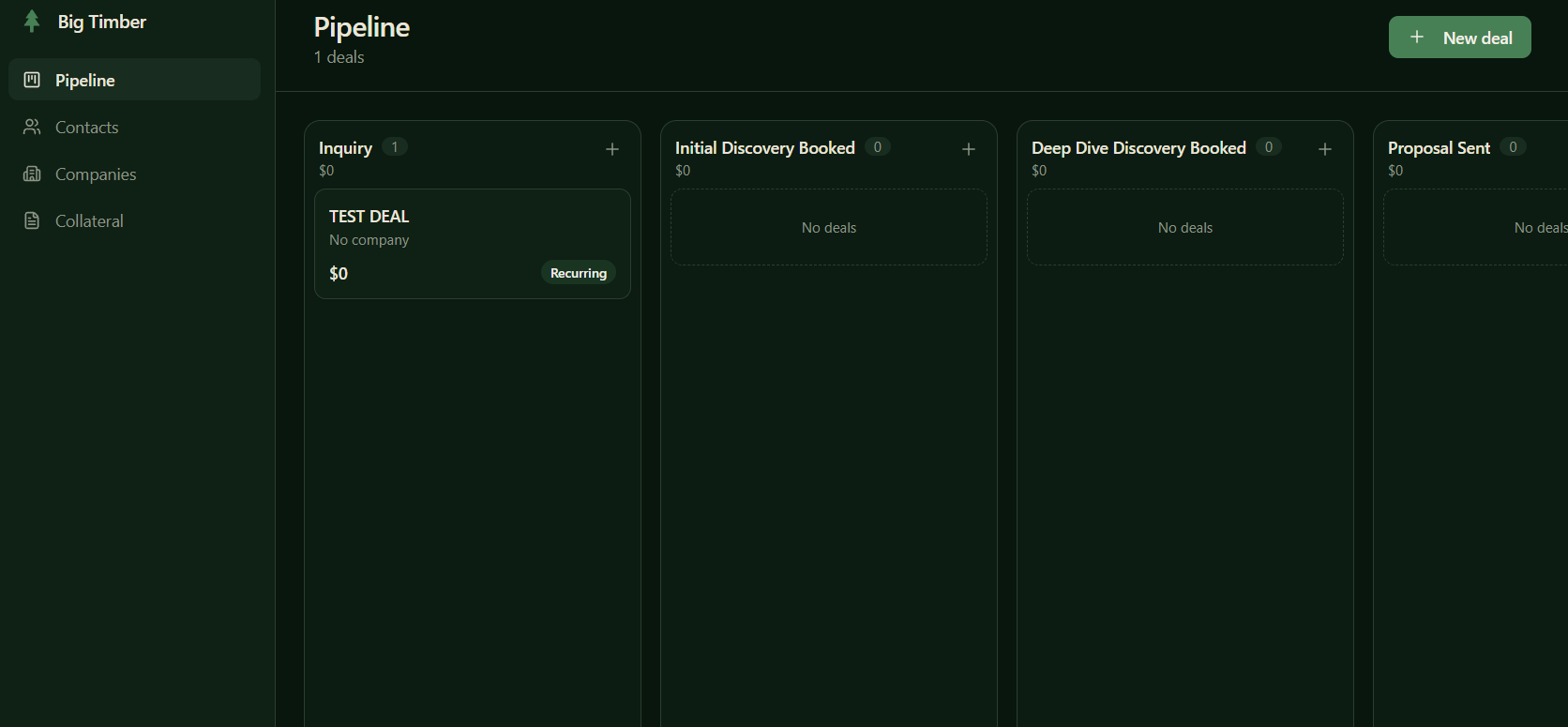
Each system has a role.
Builds the CRM, then operates it in the background
AI agent
Where feature requests and questions get asked in plain English
Slack
The integrations that feed records automatically
Email, calendar & website forms
Software and data the business owns outright
The CRM itself
Why this is Coworker.
Takes assignments and reports back. You hand it work, it prepares and returns a result.
- 01
Humans stay the decision-makers — the agent files, logs, and flags; people work the deals and close them. Feature changes happen only on request, and everything lives in a system the business controls.
Impact / Outcomes
The business owns the software and the data — no per-seat subscription, ever
The pipeline stays current without anyone doing data entry
New features arrive by asking, not by filing tickets or waiting on a vendor
The system matches the sales process instead of the other way around
Find where a workflow like this fits.
Start with the systems, work, constraints, and authority already present in your operation.