AI Lead Scanner
Every inquiry scanned. Real leads valued. The junk never trains the bidding.
What was getting in the way.
Ad platforms optimize toward whoever fills a form or calls — not toward buyers. Spam, solicitations, and wrong-fit inquiries look identical to real opportunities in the conversion column, sales burns the first hour of the day separating them, and the bidding never learns the difference between a junk submission and a five-figure job.
Context
Run in production on live ad accounts the agency manages.
How the work runs.
- 01
Catch every inbound lead
Calls, form fills, and chats land in the scanner with their full attribution chain (source, campaign, click ID) attached.
- 02
Scan the substance
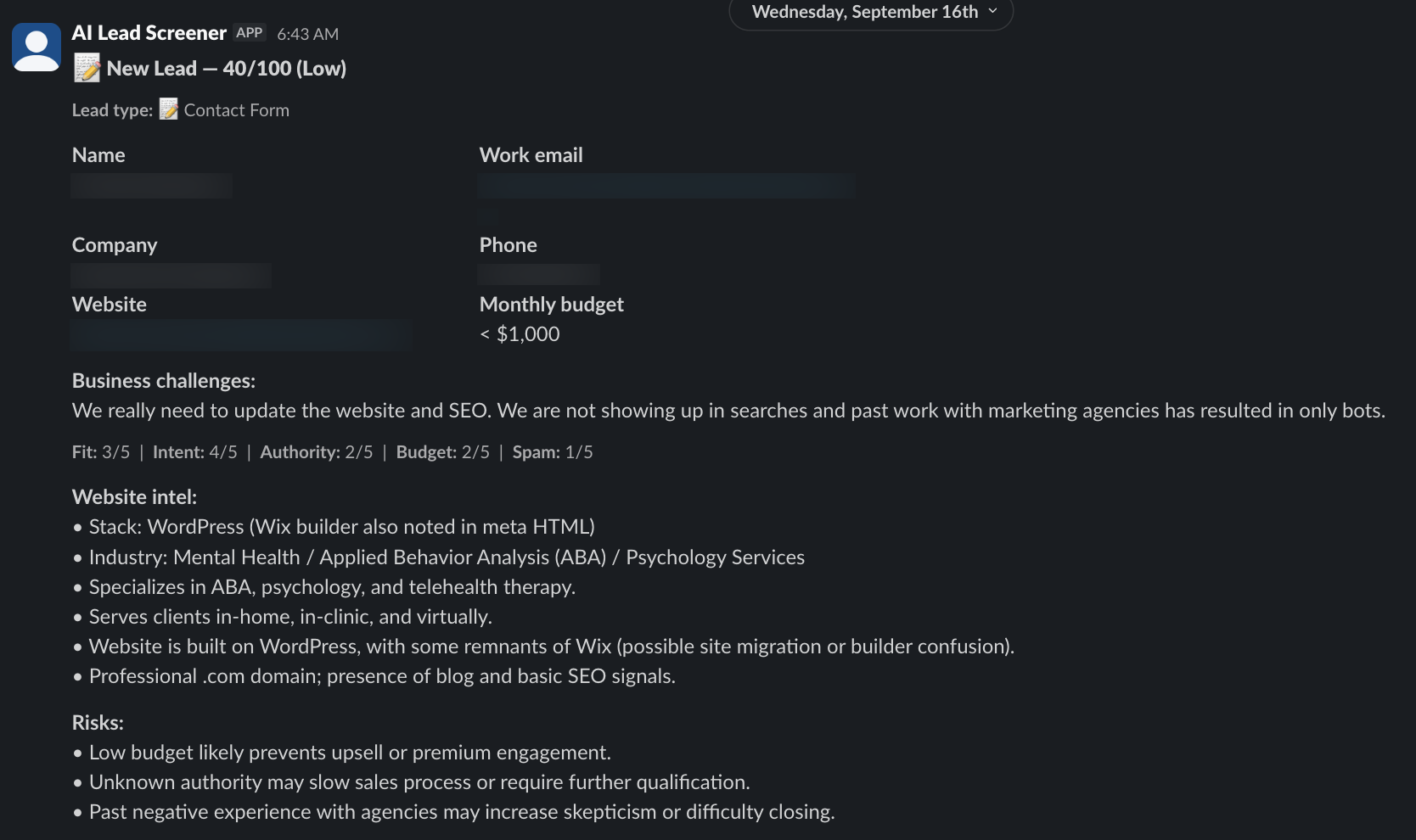
The AI reads what the lead actually said: call recordings/transcripts and form contents, not just the fact that a submission happened.
- 03
Judge fit and intent
Genuine opportunity vs. noise (spam, sales pitches, out-of-area, wrong service).
- 04
Assign a dollar value
Scored leads carry a value reflecting the size of the opportunity, not a flat count.
- 05
Teach the bidding
Qualified, valued leads fire back to the ad platform as scored-lead conversions tied to the original click, so spend shifts toward what produces real leads.
- 06
Surface to the team
The scored lead lands in the CRM and team chat with the reasoning attached.
- 07
Watch the feed
An always-on monitor alerts when the scored-lead stream goes quiet past its threshold, catching silent breakage.
Evidence from the workflow.
Each system has a role.
Signal (recordings & transcripts)
Call tracking
Signal
Website forms
Record of truth
CRM
Action (value-based conversions tied to click IDs)
Google Ads
Action (alerts)
Team chat
Assurance
Feed monitor
Why this is Coworker.
Takes assignments and reports back. You hand it work, it prepares and returns a result.
- 01
Scoring criteria and values are human-tunable. Noise is flagged, never deleted — a human can always overrule the scanner. Conversion feedback uses only first-party data the business already owns. The feed monitor's thresholds are explicit and reviewable.
Impact / Outcomes
Weekly lead reporting in dollars of scored value, not raw form-fill counts.
Ad bidding trained on lead quality instead of volume.
Feed outages caught in days by threshold alerts instead of discovered in month-end reports.
Find where a workflow like this fits.
Start with the systems, work, constraints, and authority already present in your operation.